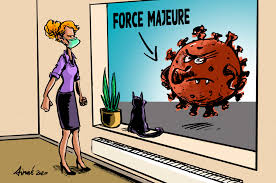
The COVID-19 pandemic has undoubtedly brought about disruptions and consequences that many were unprepared to deal with. The question is that Can we avoid fulfilling our contracts because of Covid-19?
There may be difficulties in fulfilling contractual obligations, given the current circumstances. depends on whether or not a party can delay, suspend or terminate a contract depends on whether there has been a force majeure event, or an event that frustrates the contract.
What Is Force Majeure?
Force majeure generally refers to unforeseeable events or circumstances that hinder or prevent someone from performing a contract. In Malaysia, force majeure must be expressly provided for in the contract, and such provisions are typically found in manufacturing, supply, services and construction contract.
What Constitutes A Force Majeure?
What constitutes a force majeure event depends on the precise wordings of the force majeure clause.
Is COVID-19 A Force Majeure?
Whether the COVID-19 pandemic constitutes a force majeure will depend on a contract’s wording. It may be covered under a force majeure clause if words such as ‘pandemic’, ‘epidemic’ or ‘disease’ are used.
[‘Act of God’]

‘Act of God’ is often used in force majeure clauses, and it is widely felt that the COVID-19 pandemic falls within the ambit of this term. While it could be argued that COVID-19 is a factor of nature, it seems unlikely that the courts would affirm that it is an act of God as an act of God is an accident due to natural phenomenon and exclusively without human intervention which could not have been avoided.
In deciding whether the COVID-19 and/or the Order constitutes a force majeure event, other considerations must be taken into account:
- Foreseeability
The occurrence of a force majeure event must be unforeseeable at the time of conclusion and execution of the contract. Any events which could have been reasonably avoided or overcome will be excluded.
- Causal Link and Impact
A party who wishes to invoke the defence of force majeure must show the link between the non-performance and the force majeure event. He must show that the performance of his obligation as stipulated in the contract has been rendered impossible or delayed as a result of the occurrence of the force majeure event.
- Notice
Any party relying on the force majeure clause would be required to serve a notice notifying the other party of the occurrence of such event. Failure to fulfil the prerequisites and procedures set out in the contract may result in the affected party not being able to rely on such provision.
- Mitigation
It is also important for a party seeking to rely on the COVID-19 outbreak as a force majeure event to show that he has taken reasonable steps to prevent, or at least mitigate the effects of the epidemic, where possible.
What If A Contract Does Not Have A Force Majeure Provision?

If there is no express force majeure clause in the contract, parties may examine if there are any other contractual provisions that have a similar effect. In the event of absence of force majeure clause, parties may resort to the doctrine of frustration of contract, which applies by operation of law.
Conclusion
In view that the impact of COVID-19 continues and remains uncertain, it is advisable for companies to review applicable force majeure provisions under their respective contracts to ascertain whether the current COVID-19 outbreak and/or the Order may constitute a force majeure event.