
Medical Technology or Mere Science Fiction?
Advancements in medical technology over the years have proven to be of great help in improving the healthcare system as a whole. Medical technology now plays a crucial role in almost all stages in the medical practice, from patient registration to data monitoring, from lab tests to self-care tools.

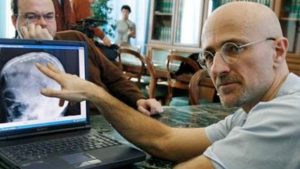
What will fall under the issue of what may and may not be ethically possible are the advancements that require a high standard of innovation, advancements that are thus far considered to be nothing but science fiction. An example would be the first human head transplant that Sergio Canavero, an Italian neurosurgeon, intends to attempt. Sergio Canavero opines that this will be possible and has 90% chances to succeed provided that the proper technologies and an estimate of 150 doctors are available. Since no successful animal head transplants with long-term survival have yet been made, it may be risky to now do it on a human, as it is still in an experimental procedure. Besides, while many are waiting for different organ transplants, it may not be too ethical to give an entire body full of transplantable organs to a single person.
There are plenty of other innovations that are expected to bring medical technology to a next level, some of them are as follows.
Implant that Accurately Predicts Which Cancer Drugs Work
Since not all cancers are the same and they all require different drugs to destroy a tumor that is fast forming in the patient, the researchers at Massachusetts Institute of Technology have developed an implant that releases minute amounts of different cancer medications once it is implanted into the tumor. This helps in saving all the time lost in prescribing the wrong drugs to the patient, because when it comes to a cancer, like many other diseases, time is always of the essence.
Organs on a Chip
Organs on a chip is a type of multi-channel 3D that simulates the functions of an artificial organ. Organs that have been simulated by microfluidic devices include the heart, the lung, kidney, artery, bone, cartilage, skin, etc. This can be used in replacing the controversial animal testing as the organs on a chip, if successful, would be effective in mimicking human body as closely as possible and give examples that demonstrate their potential use in drug development.
Pain-Free Blood Testing Technology
For those who are terrified of needles and getting bloods taken by medical practitioners, Tasso Inc developed a new device that allows a person to painlessly take blood from themselves and then take it to the clinical lab to take their tests done. This is advantageous in the sense that it saves time for medical practitioners and the patients themselves from having to queue in order to get their blood samples taken so that they can proceed with the following tests. However, it places the burden of properly labeling and carefully storing the blood on the patients, therefore, medical practitioners cannot be held liable for the misplacing of such blood samples and misdiagnoses.
“Medical technology is a broad field where innovation plays a crucial role in the delivery of health care.”
– Rahman, Z., & Shaily, S. A. (2016). CRITICAL FACTORS THAT IMPACT INTERNATIONAL FIRMS TO RAISE THE QUALITY OF SERVICE IN THE HEALTHCARE INDUSTRY OF BANGLADESH. American Scientific Research Journal for Engineering, Technology and Science, 193-211.


