
It is common that you see a “retention of title” clause in commercial contracts. What is it for and what is the extent of its effectiveness?
- The main purpose of this clause is to allow the seller to reclaim possession of unpaid goods when the buyer defaults payment without commit a trespass when doing so.
- You may wonder, why don’t you sue for the money instead? Sometimes, commercial reality dictates that it may not be viable to sue for money when the other party is not worth sueing (ie: the company may be in financial difficulties and it simply has no money to pay you). In certain cases, it might be more financially beneficial for you to repossess the goods and resell them.
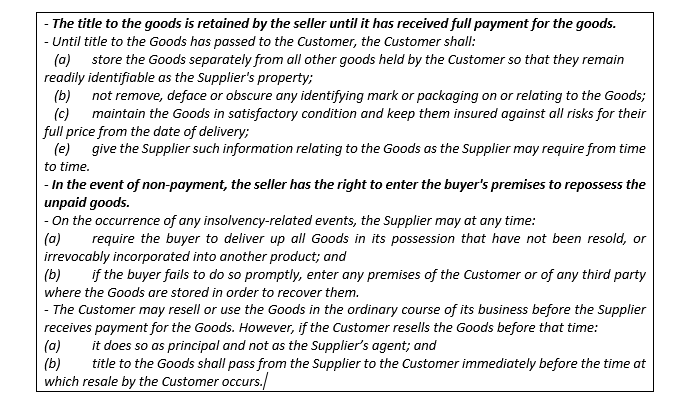
A typical retention of title clause may look like this:
Limitations on its effectiveness:
- Company in administration: If the buyer is a company in administration/insolvent, no steps can be taken to repossess the goods without the consent of the administrator or the permission of the court.
- Incorporation: The retention of title clause must be properly incorporated in the contract between the seller and the buyer to be legally enforceable.
- Low/no resale value: Retention of title will be of little or no practical benefit where the goods supplied are perishable or have a low scrap value (ie: cannot be resold at the same price/quality after repossess them).


